Saskia Boogman for Bretz RV

Many people crave the freedom of the open road, waking up somewhere new each morning and campfire memories under a sky full of stars. If this sounds like your kind of adventure, you’re not alone — 16.9 million households in the U.S. are dreaming of RV ownership, too.
However, the RV market is huge, with so many models, layouts and features to consider. Motorhomes, travel trailers, fifth wheels, toy haulers — each offers something unique. Fortunately, this guide by Bretz RV can help you quickly narrow things down before you even visit a dealership.
Key Takeaways
Before diving in, here are some important things to keep in mind for finding the right RV:
- Motorized vs. towable: Each type offers unique perks in driving, setup, space and cost. Your travel style can be a key factor in choosing the right fit.
- Beyond the sticker price: Remember to budget for insurance, fuel, maintenance, storage, campground fees and towing needs. The real cost often goes beyond what you see up front.
- What really matters: Living space, sleeping capacity, your comfort with towing and how often you’ll hit the road impact your satisfaction more than just RV size or luxury features.
Motorized vs. Towable RVs
First big decision — do you want a motorized or towable RV? Motorized RVs have their own engine, combining travel and living in one unit. Towable RVs typically need a separate tow vehicle, but offer flexibility once you’re parked.
Here’s how the differences between motorized and towable RVs play out in real-world use:
- Motorized convenience: Imagine pulling over for lunch, using the restroom while cruising and enjoying a simpler driving experience without a towing learning curve. The catch is that once you’re at camp, you might need to drive the whole rig if you want to explore town or grab groceries.
- Towable freedom: As their name suggests, towable RVs require a capable tow vehicle, and there’s often a learning curve for hauling safely. But once you’ve parked and leveled your trailer, you can unhitch your truck or SUV for local errands and day trips.
When making your choice, consider your current vehicle, how you like to camp, your budget and how you feel about driving. If you already have a truck that can tow and love settling into a spot for days, a towable could be ideal. If you prefer an all-in-one setup and enjoy moving frequently, a motorhome might be a good fit.
Motorhome RV Types
Motorhomes are your all-in-one travel solution, with a built-in engine and living space. Drive, sleep, cook and relax, often without leaving your rig.
These three main motorhome classes offer their own perks in terms of space, driving ease, storage, sleeping room and cost. To find your match, consider how often you’ll travel, your comfort needs, who’s coming along, your driving confidence and your long-term plans.
Class A Motorhomes
Think of Class A motorhomes as the kings of the road — huge, luxurious and often resembling a bus. They’re built for long hauls and ultimate comfort.
These spacious RVs can be perfect for epic road trips, full-time living and anyone who wants many of the comforts of home on wheels. Here’s what you might find:
- Residential comfort: Class A motorhomes often include full kitchens with standard appliances, roomy bathrooms with showers, cozy sleeping zones and generous living areas. It can truly feel like home.
- Ample storage: Massive exterior bays and interior closets can mean plenty of space for extended adventures, gear and many belongings.
- Smooth travels: Air-ride suspension and powerful engines often make highway cruising incredibly comfortable, even across states.
However, be aware of:
- Higher costs: Their size can mean more fuel, pricier insurance, higher maintenance and sometimes steeper campground fees.
- Driving dynamics: Piloting a bus-sized vehicle often takes confidence and practice. You might need to be mindful of height and length limits on certain routes and campsites.
Class A models can be a fantastic choice for seasoned RVers, those planning extended adventures or anyone prioritizing maximum comfort and space over nimble mobility.
Class B Camper Vans
Meet the Class B camper van — a smaller, agile motorhome, typically built on a regular van chassis. These options prioritize mobility and efficiency, rather than sprawling living space.
They can be perfect for solo adventurers, couples and anyone craving flexibility and spontaneity. Here’s why they might be a good fit:
- Easy to drive: Much like an oversized van, they can often fit into standard parking spots and navigate city streets with ease.
- Fuel-friendly: Smaller engines and lighter builds can mean better gas mileage than bigger motorhomes.
- Explore many places: You might squeeze into tight campsites, urban hideaways or off-grid spots without trying to park a giant rig.
Just keep the following limitations in mind:
- Compact living: Kitchens, bathrooms and sleeping areas are often scaled down. This might feel a bit snug for bigger groups or extended trips.
- Limited storage: You may need to pack smart and travel light, as exterior and interior storage can be minimal.
Class B camper vans can be a great option if mobility and spontaneity are top priorities over huge living areas or residential luxuries. They’re often fantastic for weekend escapes, embracing “van life” or simply enjoying the freedom of the open road.
Class C Motorhomes
Class C motorhomes can be a sweet spot, blending some of the spaciousness of a Class A with the easier driving of a Class B. You’ll often recognize Class C motorhomes by that distinctive sleeping area perched over the driver’s cabin.
These mid-sized motorhomes can be great for families, offering smart layouts and a manageable size. Check out these features:
- Easy handling: They’re often more straightforward to drive than many Class A RVs, yet can still be roomier than Class B vans.
- Family-friendly: That over-cab sleeping area can mean extra beds without eating up much floor space — a good option for families.
- Better on gas: Generally, they tend to use less fuel than bigger Class A motorhomes, while still offering comfortable amenities.
- Flexible layouts: With options like slide-outs, various dinette setups and different bathroom designs, you can often find a floor plan to fit many group sizes and travel styles.
Class C motorhomes can be a fantastic match for families and anyone who wants comfort and features without necessarily committing to the full size and expense of a bus-style RV.
Towable RV Types
Towable RVs are a flexible, often more budget-friendly alternative to motorhomes. A notable perk is that you can unhitch your tow vehicle once you’re set up at camp, making local transportation easy.
Before you fall in love with a towable, double-check your tow vehicle. You’ll want to know its towing capacity, hitch compatibility and payload limits. Not every vehicle can safely tow every trailer.
Understanding your truck or SUV’s capabilities before you start browsing is important. The towable market is extensive, offering a wide range of sizes and layouts, from weekend warriors to full-time travelers. Some popular options are listed below.
Fifth Wheels
Fifth wheels can be a fantastic choice for spacious living. They typically use a specialized hitch in your truck bed, and their unique bi-level design often creates a truly residential camping experience.
These large towables can boast some of the most comfortable living spaces around. Here are some highlights:
- Homelike comfort: You might find raised bedroom areas, full kitchens, big bathrooms and spacious living rooms, potentially rivaling some Class A motorhomes.
- Abundant storage: Massive exterior bays and interior closets can mean plenty of space for extended adventures and seasonal setups.
- Stable towing: That truck-bed hitch can give you a solid connection and often better weight distribution than bumper-pull trailers.
But keep these considerations in mind:
- Heavy-duty truck often required: You’ll typically need a three-quarter-ton or one-ton pickup with the right hitch and towing power to haul one safely.
- Height matters: The bi-level design makes them taller, so you’ll want to watch out for clearance at some campgrounds, gas stations or covered spots.
Fifth wheels can be ideal for extended stays, seasonal camping and anyone who prioritizes interior space and homelike comfort. If you have a capable truck and enjoy settling in for longer, fifth wheels offer value and livability.
Travel Trailers
Travel trailers are generally versatile, coming in just about any size, layout and price point you can imagine. These adaptable RVs can be towed by a range of vehicles, from midsize SUVs all the way up to full-size trucks. It often depends on the trailer’s weight and your vehicle’s towing power.
Here’s what might make them stand out:
- Wide vehicle compatibility: Smaller travel trailers can sometimes be pulled by SUVs and crossovers, while bigger ones typically need a truck with more towing muscle.
- Flexible floor plans: From tiny teardrops to family-sized models with slide-outs and bunkhouses, you can often find a layout for many adventures and budgets.
- Budget-friendly entry: Travel trailers are often less expensive up front than motorhomes or fifth wheels, making them a popular starting point for new RVers.
Just remember that towing takes practice. Backing up, distributing weight, controlling sway and safe towing practices generally take a little getting used to, especially for first-timers. Travel trailers can be an excellent choice for families, couples and first-time buyers who want flexibility without going for a motorized RV.
So, what size and layout do you need in an RV? It often comes down to who you’re traveling with and how much time you’ll spend inside rather than exploring outside.
Toy Haulers and Other RVs
For adventure-focused travelers who bring their toys along, toy haulers can be a game-changer. These specialty RVs feature a dedicated rear garage, often ideal for hauling motorcycles, ATVs, kayaks, bikes and other outdoor gear.
These clever trailers can creatively blend storage and living space. You might appreciate these features:
- Dedicated cargo space: Built-in ramps, tie-down points and tough flooring can make loading and securing your equipment easy.
- Convertible layouts: Many toy hauler garages can transform into extra sleeping areas or living space when you’re not hauling gear.
Remember, cargo weight can add up fast, so towing power is key. You’ll need a tow vehicle with plenty of capacity to handle both the trailer and your toys.
Don’t need a garage? For lighter, easier towing and compact storage, consider pop-up campers. They typically prioritize portability over extensive insulation or amenities, making them ideal for fair-weather camping and spontaneous weekend trips.
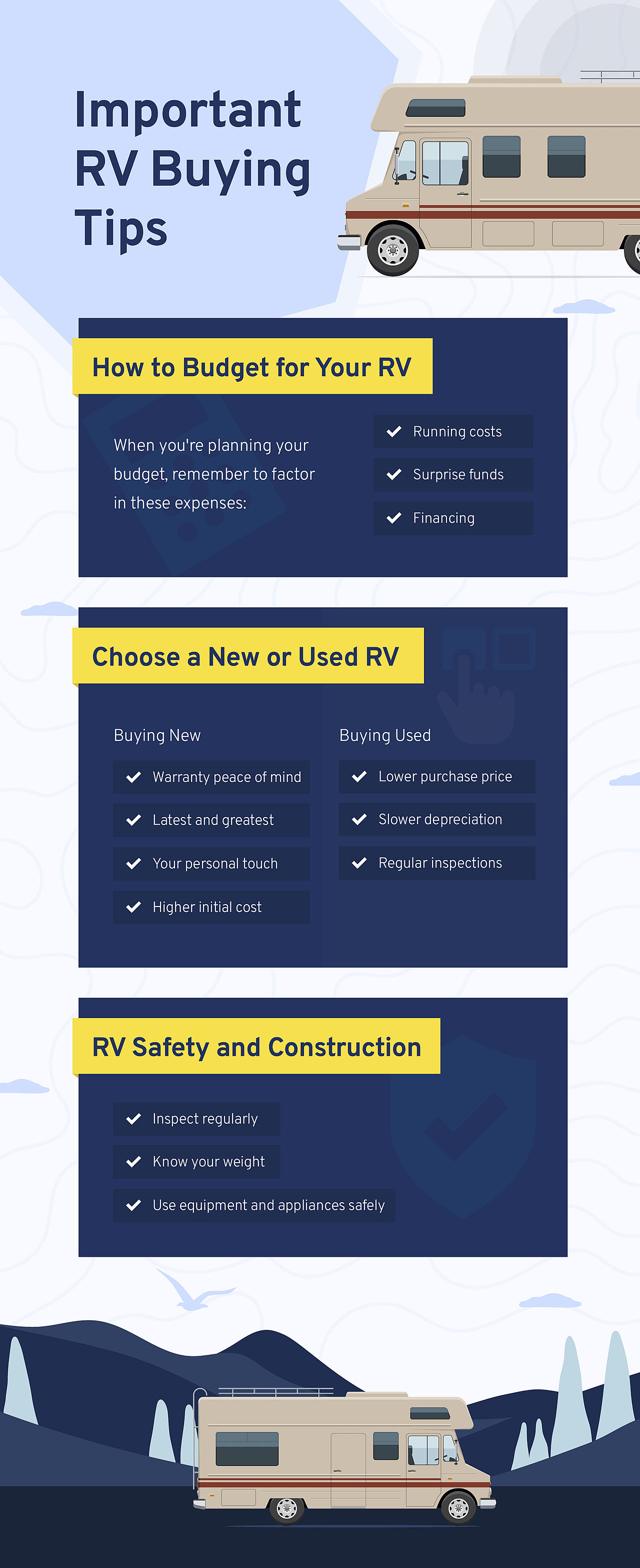
Important RV Buying Tips
Beyond just picking an RV type, there are a few crucial things to know for any RV purchase. Understanding budgeting, new versus used, safety and common first-timer questions can help you steer clear of costly mistakes.
How to Budget for Your RV
The sticker price is just the beginning. Smart RV shoppers often look beyond that initial cost to understand the full ownership picture.
When you’re planning your budget, remember to factor in these expenses:
- Running costs: Insurance, registration, fuel, campground fees and routine maintenance can all add up.
- Financing: Think about loan terms, interest rates, down payments and monthly payments. These can dramatically impact your total cost over time.
- Surprise funds: Setting aside some cash for accessories, towing gear, upgrades, unexpected repairs and other lifestyle costs can give you breathing room.
Many find it helpful to explore RV financing options early. Knowing your potential monthly payment, loan length and total interest before you shop can help you set realistic expectations and avoid budget surprises.
Choose a New or Used RV
Both new and used RVs have appealing benefits, depending on your budget, what you care about most and how hands-on you want to be with maintenance.
Opting to buy a new RV means:
- Warranty peace of mind: Manufacturer warranties often protect major systems, potentially helping with repair costs early on.
- Latest and greatest: You might find updated appliances, better fuel economy, fresh layouts and current safety features straight from the factory.
- Your personal touch: Many dealers offer factory-order options, so you can pick colors, layouts and upgrades just for you.
- Higher initial cost: New RVs typically cost more up front and often experience their steepest depreciation in the first few years.
Choosing to buy a used RV means:
- Lower purchase price: Used RVs can be considerably cheaper up front, potentially letting you get more space or features than a new model for the same budget.
- Slower depreciation: The previous owner likely absorbed the initial depreciation, so your used RV may hold its value more steadily.
- Regular inspections: Thorough pre-purchase inspections, detailed maintenance records and a careful assessment of overall condition are important to help avoid expensive surprises.
Ultimately, both new and used RVs can offer fantastic value. Your budget, lifestyle and willingness to handle maintenance will help guide you. What truly matters most is finding the RV that fits your travel style, regardless of whether it’s new or pre-loved.
RV Safety and Construction
Reputable RV manufacturers follow strict safety standards, like NFPA 1192, covering everything from electrical systems to fire safety. As such, you can be confident that your RV meets minimum safety requirements.
But your role as an owner is just as important. Smart RV operation and regular maintenance can help keep you, your passengers and your investment safe. Here are some key safety checks:
- Inspect regularly: Monitor tire pressure, check brakes, inspect hitch connections, and test smoke and carbon monoxide detectors before each trip.
- Know your weight: Never load your RV beyond its gross vehicle weight rating (GVWR) or your tow vehicle’s capacity. Overloading can create serious hazards.
- Use equipment and appliances safely: Cooking equipment is a common cause of RV fires. Always use appliances safely, keep fire extinguishers handy and properly maintain propane systems.
Regular checks, preventive care and safe driving habits can protect your family and extend your RV’s life.
 Bretz RV
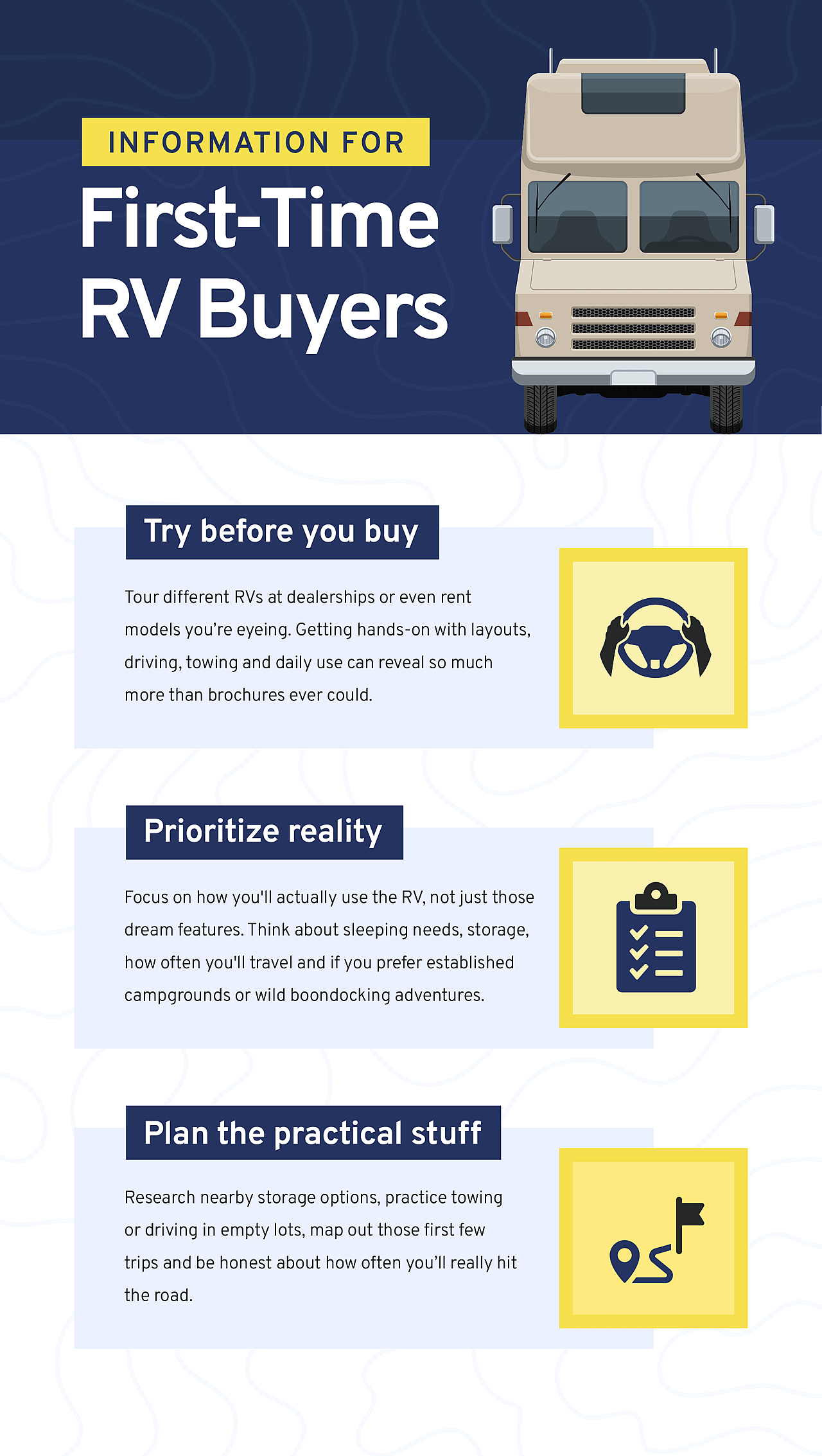
Information for First-Time Buyers
Jumping into RV ownership for the first time? It comes with its own set of questions and excitement. A little prep can go a long way toward helping you make a decision you’ll love for years.
Here’s your road map to success:
- Try before you buy: Tour different RVs at dealerships or even rent models you’re eyeing. Getting hands-on with layouts, driving, towing and daily use can reveal so much more than brochures ever could.
- Prioritize reality: Focus on how you’ll actually use the RV, not just those dream features. Think about sleeping needs, storage, how often you’ll travel and if you prefer established campgrounds or wild boondocking adventures.
- Plan the practical stuff: Research nearby storage options, practice towing or driving in empty lots, map out those first few trips and be honest about how often you’ll really hit the road.
First-timers who take the time to research, test and plan often avoid common headaches and can start loving their RV investment from day one.
 Bretz RV
Find the Right RV for You
Finding your perfect RV isn’t about choosing the biggest or fanciest model. It’s more about discovering the one that best fits your travel style, comfort needs, budget and long-term dreams.
Your ideal RV is one that can fuel the experiences you crave on the road — whether that’s spur-of-the-moment weekend escapes, long seasonal stays or full-time adventure living. Ask yourself:
- How often will you really use it?
- Where will it live when you’re not on the road?
- Who’s coming along for the ride?
- What kind of camping vibe are you chasing?
Your answers to these questions can point you toward your best choice if the open road is calling.
This story was produced by Bretz RV and reviewed and distributed by Stacker.